About Me

My photo
Pilgrim, priest and ponderer. European living in North East England. Retired parish priest, theological educator, cathedral precentor and dean.
Showing posts with label heritage. Show all posts

Monday, 1 July 2019

The Way of St Hild: a new pilgrim route

When we think about The Way of Saint Hild our first thoughts are naturally about Hild herself, the life and times of this great Saxon woman, and how the themes of her life might speak to us today. And I shall come on to her shortly. But before we do, I want to look briefly at the other important word in this project title, Way. 

The idea of pilgrimage trails is ancient. For centuries people have criss-crossed Europe to undertake pilgrimages to the great Christian shrines of Jerusalem, Rome and Santiago da Compostela where I was two months ago. Here in England among prominent pilgrim destinations have been, and still are, Canterbury, Walsingham and Glastonbury. And in the North East, Lindisfarne, Hexham, Jarrow, Wearmouth and Durham where I was privileged to spend thirteen years of my life as, you might say, a guardian of St Cuthbert’s shrine.

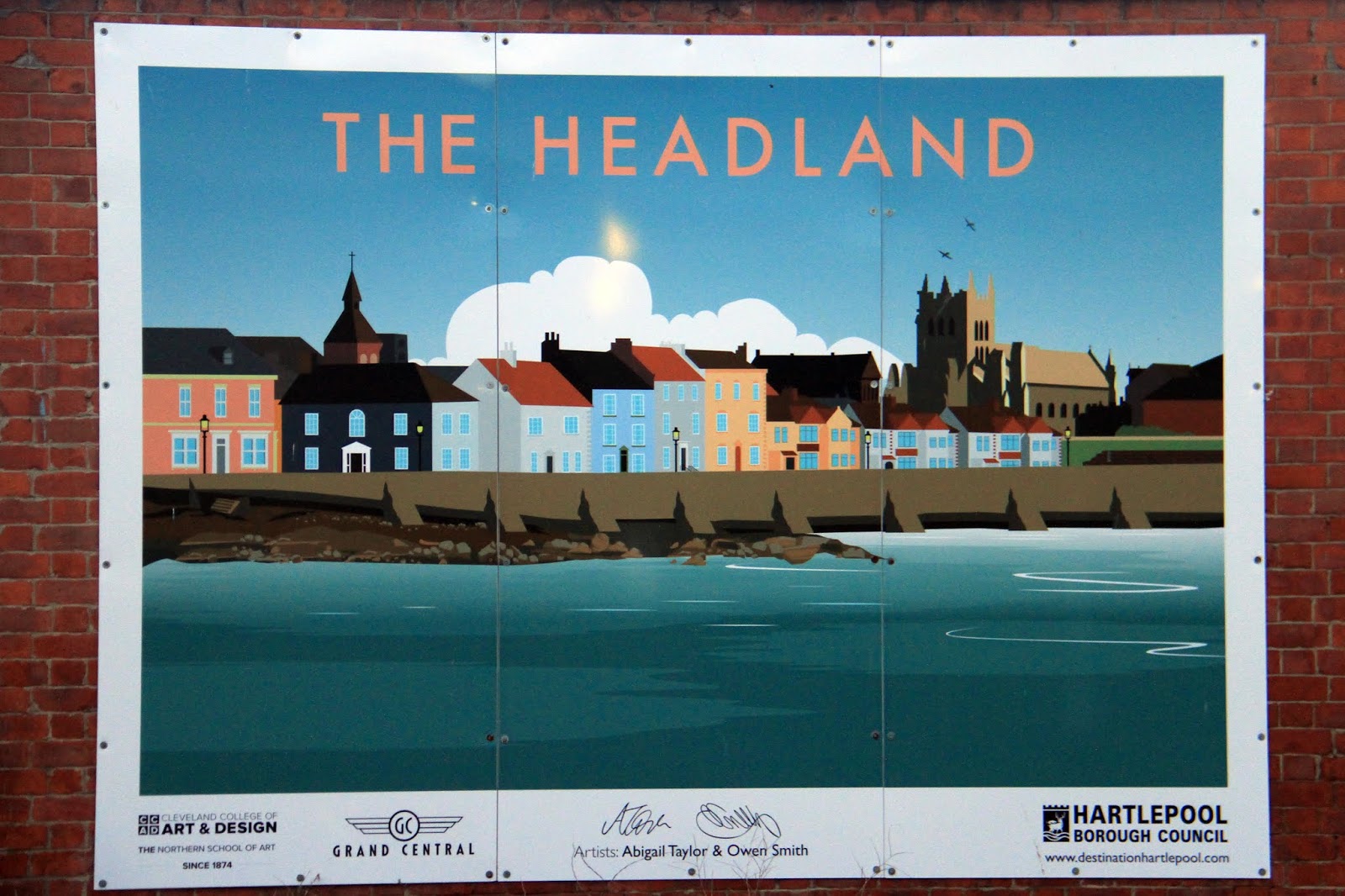
Among those honoured places here in the North East are, or ought to be, South Shields, Whitby and Hartlepool, the three sites most closely associated with St Hild, and through her, the Saxon saints of the seventh century. The Way of St Hild will link the two southern sites associated with her, a pilgrim path along the North Sea that connects St Hilda’s Church on Hartlepool’s Headland to the Abbey on the cliffs above Whitby. 


What is a pilgrimage for? Why would anyone want to walk the path we are creating? Why do people already walk the St Cuthbert’s Way from Melrose to Holy Island, and the St Oswald’s Way from Holy Island to Heavenfield? This seems to me to be a fundamental question to ask if we are going to make sense of this project. 

A pilgrimage is a journey with a purpose. Traditionally, that meant a religious purpose, making an often long and arduous journey to visit a place associated with some key event in the story of faith, or with the lives of holy men and women who are revered in that story. The tradition speaks about holy places, sites that have been touched and lit up in some way because of those associations. “Hild was here.” And insofar as the whole journey is inspired by this sense of holy purpose, we can say that it comes to define a sacred geography, a landscape imbued with historical, cultural and spiritual meanings. 
So pilgrimage declares: this is not just any landscape, however historic, however beautiful. The pilgrim way contributes to what we can call place-making. Its very existence enhances our understanding of our native geography, its genius loci or “spirit of the place” that makes it what it is, or as we tend to say nowadays, its sense of place. The journey may already be familiar or be travelled for the first time. The important thing is that pilgrimage lends it added significance. It suggests new ways of looking at it because of the stories it commemorates. There are new interpretations, new meanings, new textures. 
Historically, pilgrimage has been defined in terms of journeys with a religious purpose, but I need to broaden that understanding. A journey can have many kinds of purpose that are not always overtly religious. Veterans travel to honour war graves where their comrades lie buried. Holidaymakers visit distant places they haven’t been to before to learn about their culture and art, meet their peoples and admire their landscapes. People go back to their birthplace or where their ancestors have lived. These are all pilgrimages in their different ways. A holiday is literally a holy day. That makes the point. 
The Way of St Hild is offered as a journey that carries multiple significance. We can see this clearly from the twelve proposed stations for the “augmented reality” interpretations. It begins and ends with churches associated with St Hild herself, a traditional way of setting out and completing a pilgrimage at a sacred site. Some set our saint in the context of the Saxon era and explore how her story was told and her pilgrimage developed into the later middle ages and beyond. Another identifies her as one of a North East cluster of holy men and women who were honoured by pilgrimages. But some stations are more historical. They make us aware of the Anglo-Saxon culture in which Hild lived and that the pilgrimage landscape has a prehistory going back to Roman times. One of them opens up an aspect of the natural world, the wildlife of the Tees Estuary and helps us understand the landscapes that Hild knew and that formed her as a northern saint. Not all of these are directly focused on Hild herself, but all of them contribute to the rich texture of this pilgrim journey and place her story in a larger context than simply her own life and times.
One of the important aspects of any pilgrimage is that while it often commemorates people or events in the past, at its best it is never backward-looking. That is to say, good pilgrimage makes a distinction between the past in itself, the past as it’s featured in the stories told about it by subsequent generations, and the past as we ourselves encounter and experience it as people of today. Theologians talk about anamnesis, bringing the past into the present so that it has the potential to shed light upon our contemporary concerns and even contribute to shaping the future. This is what is happening when Christians celebrate the eucharist and take bread and wine “in remembrance of me”, not to relive the past memory but to actualise it in the present, make it a real agency of transformation. 
This seems to me to be crucial in the way we set about the project of imagining this particular Hild-inspired journey and creating it as an offer to enrich people’s lives. How do we avoid setting up an exercise that is no more than an exercise in recreating the past? By taking an intentionally holistic view of what we are engaged in, not least in its connections with our contemporary world. This means broadening the scope as far as we can while preserving the integrity of the controlling theme of St Hild. I shall come back to this later on.
I began by defining pilgrimage as journey with a purpose. Ultimately, I guess that purpose means our own self-understanding as contemporary men and women. A way is more than a physical path. It suggests our way of life, a spirituality of being human, the journey we cannot help making if we are serious about human life and being good citizens of our age. We want in our best moments to know our place in the world and how we can leave a legacy that will have added value and enhanced not only our own lives but those of our successors.

********
So much for the meanings of pilgrimage. I want now to turn to Hild herself and how we should commemorate her in this pilgrim journey. Let me say something about her life and times, and then suggest themes to consider as we create this pilgrimage that bears her name. 
Our source for the life of St Hild (in Latin, Hilda) is the Venerable Bede, that great chronicler of the late seventh and early eighth century to whom we owe the very idea of “England”. As a Northumbrian living in the double monastery of Wearmouth and Jarrow, his focus was inevitably northern which makes him the best (and often only) authority on Christian Northumbria in what we’ve come to call its golden age. It is agreed by all that Bede was a scrupulous historian when judged by the criteria of his times, and a wealth of information about the Saxon kingdom and its people has been preserved to us which would otherwise have been lost.
He tells us that Hild was a Saxon princess who was brought up in the court of King Edwin of Northumbria. When he converted to Christianity in 627, the first Northumbrian king to do so, he and his entire court were baptised by Paulinus at York, including the thirteen-year old Hild. Sent away to the safety of the south when Edwin was killed by the Mercians in 633, she returned to Northumbria at the summons of Aidan of Lindisfarne who asked her to found a religious community somewhere north of the River Wear. Tradition identifies this with the ancient Christian site on which St Hilda’s Church in South Shields was later built. In 649 Aidan appointed her as Abbess of the double monastery at Hartlepool, a community of men and women who took vows and lived separately but worshipped together in their abbey church. In keeping with Northumbrian Christian tradition instituted by Bishop Aidan, himself an Irishman, their rule of life would have drawn on Irish rather than Roman Benedictine monasticism.
Again, we don’t know precisely where the community was situated but we can assume it to have been on the Headland by St Hilda’s Church where the remains of the medieval sea wall and the convent cemetery can still be seen. Perhaps we should see the Headland as a second Lindisfarne, an almost-island that was conducive to spiritual reflection and the life of prayer. The Saxon church loved these semi-detached places by the sea, isolated in themselves yet always connected to the mainland. Even today, the Headland retains these qualities despite – or perhaps because – of its urban character. It’s one of the most magical places I know. In my book Landscapes of Faith I said of it that “it is quintessentially north eastern in its marriage of a centuries-old Christian history and more modern urbanisation”. Like Bede’s churches at Wearmouth and Jarrow, the Saxon churches at Billingham and Escomb, and Durham Cathedral itself. 
Hild founded Whitby Abbey in 657. This too was a double monastery, and there is no reason to doubt that it was situated on the cliffs near the Benedictine abbey that was built there in the thirteenth century. (Indeed, it could even be possible that it was “double” in the sense Wearmouth-Jarrow was: a single convent on two geographical sites, Hartlepool and Whitby.) Bede commends Whitby as a model of its kind, a house of discipline, prayer, learning, good works, peaceability and charity. Its greatest moment took place in the year 664. Oswiu, Oswald’s brother and successor as King of Northumbria, convened a synod there to resolve matters of dispute in the church of which he was the leading lay person. 
The principal point of contention concerned the date of Easter. This may seem arcane to us today, but to Christians in the early centuries of the church’s history it was a matter of extreme importance to celebrate the festival of the resurrection on the correct day and together. Bede himself wrote about the mathematics and astronomy that underlay the complex calculations. Irish tradition, inherited by the influential community on Lindisfarne, calculated the date one way, Catholics, taking their lead from the continental European church and St Augustine’s mission in the southern kingdoms, in another. This was a sharply personal issue for Oswiu because while he like his brother followed the Irish calendar, his queen Eanfleda who had been brought up in Kent followed Roman practice. This meant that one of them could be feasting in Eastertide while the other was still fasting rigorously in Lent. What was at stake was the unity of the Northumbrian church. But more than that, the kingdom’s political relationships with the rest of England and with the continent had everything to gain by reaching agreement.
Oswiu listened carefully, then decided in favour of the Catholic way and imposed it on his kingdom. This was how decisions were made in those days. Cuius regio, eius religio – you followed the religion of whoever reigned over you. Those on Lindisfarne who could not accept it returned to Iona where they had come from, and then to the north of Ireland (where, in due course, the church fell into line with the Catholic south, thus ending a schism that had divided the western church). For Bede, the Synod of Whitby was a turning point in the history of the northern church. And we can see Hild’s role in the synod as presiding over bitterly contested ground, acknowledging the outcome of the dispute, and promoting its acceptance among the company of those gathered in her monastery and in the wider Northumbrian church – all the more impressive for the fact that she personally inclined to the Irish tradition in which she had been formed, rather than the Roman.
Hild died on 17 November 680. It was not long before her memory began to be venerated. We know this from a church calendar from early in the eighth century, not long after the Lindisfarne Gospels were written. I think we should remember her for her holiness, her piety, her administrative skills, her wisdom, her learning, her charity and, not least, her extraordinary energy even in old age. Two stories endeared her to the ordinary people of her day. Bede tells the story of how she enabled the simple cow-herd Caedmon to sing and compose poems in praise of God. He is the earliest English poet whose name we know, so Hild came to be celebrated as a midwife of poetry and song. A legend was told of her turning snakes to stone during an infestation of the town, which supposedly explained fossils found in the cliffs; hence the ammonite symbol long associated with her which you will see on many churches and institutions dedicated to her.

********
Why does her story matter to us today, and how should we set about commemorating it in our Pilgrim Way of St Hild? Let me make three suggestions.
First, we should respect and honour our Christian heritage. What do I mean by invoking that slippery word? I mean, among other things, the “landscapes of faith” that we are fortunate enough to live in here in North East England. In England, it’s perhaps only in Cornwall and the North East that we have such a rich legacy of saints from early Christian times. The difference is that whereas in Cornwall, so many of them have survived only in village names and church dedications, here in the North East we know a great deal about who they were, how they lived and what they achieved that left such a mark on the collective memory that they were canonised as saints. 
Most people have heard of Aidan, Cuthbert and Bede. Fewer could name Oswald, Wilfred, Benedict Biscop, St John of Beverley, Chad and Cedd. Hild belongs in that second group of saints who had a real and lasting impact on the history of the English, but remains comparatively little known. I think it is the duty of places associated with any great men and women to promote their memory and celebrate their contribution to our history. It helps if natural and built heritage create obvious ways in which to do this, which they indeed do in this part of England. 
But intangible heritage is as important as what is visible and concrete. Intangible heritage has to do with stories and their meanings, the values and aspirations, that human beings assign to their surroundings to explain why they matter and should be cherished. It is the story itself that must be told in order to interpret the “sense of place” I spoke about at the beginning, and bear witness to the importance of events that shaped our past. So our project is an act of piety, that is, an explicit acknowledgment of what makes our places what they are, and what we owe to them as people who are, consciously or unconsciously, formed by them. In her case, we should not be afraid of speaking about promoting spiritual values, those dimensions of human life that are intanglible but influential and formative, whatever content we choose to give to that kind of language.
Secondly, we should draw on the narratives of the past so as to inform our present and future. I am thinking of two aspects of Hild’s story as a leader in public life that I think speak directly to our society today. She was a woman, perhaps the most accomplished of the women Bede makes a point of celebrating in his History. An abbot or abbess was always a person of significance in Saxon England. But her oversight as a woman of one of the great institutions of Saxon England, and her capacity to open up educational possibilities for young women and girls in the convent tells us much about her stature. Her presiding role in a monastery important enough to host a royal synod is all the evidence we need of her standing in the kingdom. This speaks volumes to the times we are living in as we struggle to achieve equality in our gender roles in public and personal life. By extension, we could see her role as symbolic of our quest for a genuine inclusion of all who are marginalised in our supposedly equal society. We can see Caedmon, the singer whom Hild brought in from outside as an instance of the literally voiceless person on the edge of her privileged circle being recognised, heard, taken seriously and given back their power. As a practitioner of social justice, she speaks eloquently into our own divided society. 
And this is what Hild’s conduct at the Synod of Whitby particularly witnesses to. As far as we can tell, she demonstrated the capacity to reach across a society fractured by ideological debates in order to achieve unity and common purpose. We can see her, I think, as a broker of reconciliation towards those hurt by the king’s decision, for while loyal to the agreed outcome, as a woman herself shaped by Ireland and Iona, she did not lose her sympathy for those on the losing side. In our increasingly fraught politics, there are all kinds of lessons those in public life can usefully draw from the career of a leader whom tradition honours for her celebrated wisdom in turbulent times.
But thirdly, we need to respect the pastness of the past and while learning from it, we should not attempt to recapitulate it in our present experience. I said earlier that we must not allow a project of this kind to become locked into the past, still less to try to reconstruct it and relive it in the utterly different world in which we live. We only do justice to Hild if we can distance ourselves from her and recognise that she was a woman of her time. There is so much we can learn from her, but it doesn’t follow that we should inhabit the cultural assumptions and thought-world of seventh century Northumbria. We must beware of nostalgia for our Saxon past. Nostalgia is literally aching for home. But the past is not our home. The present is.
This hardly needs to be said, but there is a strain of heritage activity (which has influenced some sections of the church in its take on Northumbrian Christianity) that risks romanticising the past, subtly – or not so subtly – suggesting that it was better, kinder, more noble, more courageous than the present. I think this is a point worth dwelling on at a time when nationalism is on the rise, often driven, it seems, by a nostalgic harking back to the days of empire or the wartime spirit. More than thirteen centuries after the event there are still people who will tell you that the decision at the Synod of Whitby was a terrible mistake, fatally compromising the purity of a supposedly primitive Celtic Christianity as against the corruptions of Rome. When heritage colludes with nostalgia to convey the message that the past was always better than the present, we should beware. 
The fact is that the Anglo-Saxon world was cruel and harsh to an extent that we don’t always realise when we look at our Christian sources. Christian monarchs thought nothing of slaughtering their foes as a matter of daily reality. The saints of that era practised extreme asceticism of a kind we might be tempted to regard as eccentric or even abusive, especially when the young were trained up in these practices. I am thinking of Cuthbert walking into the North Sea and reciting Psalms all night long while the waters rose up to his neck. We are impressed and moved by that story but I doubt that we should emulate it, especially knowing the North Sea as we do. So it’s important that we do not regard historical figures as our contemporaries, however much we may admire them. We need to learn from them intelligently, exercise discernment as their critical friends.
This is how we must respect Hild as a great woman who belongs to our common past. We honour her by respecting the distance that lies between our times and hers, the gap of the centuries across which we reach back to her story and try to tell it as people of today. This entails understanding how her memory come down to us endlessly worked on and reshaped by those who received it, cherished it and bequeathed it to those who followed. Tradition is traditio, literally “that which is handed on”. It is never free of the influences of those who receive it and pass it on. This is part of its richness, that layered, textured quality the deep structures of our best stories acquire precisely because they have been handled with such reverence and love. 
So the interpretative task is: how do the horizons of the Saxon and our modern worlds encounter each other in ways that respect the distinctiveness of each and enrich our own? The Way of St Hild ought to help us pilgrims who walk it understand our own times all the better for the insights that our past sheds on it. Here is where the choice of augmented reality stations and the interpretative experiences we offer is fundamental. If the enterprise is to realise its cultural and spiritual aims, it must demonstrate a holistic understanding of pilgrimage that sets it in our own times and addresses contemporary concerns. 
For example, I could see further interpretation points) focusing on themes such as: 

-the natural maritime heritage of this stretch of the North Sea coast (recalling how the Saxon 
saints lived close to nature), together with threats to the environment, species diversity and natural habitats;
-industry on the coast including mining, shipping and fishing;
-Hartlepool’s role as a gateway to safety for those given sanctuary at Durham Cathedral and embarking on exile
-sea and land communications along the coast (in the middle ages, the sea was the highway of choice that connected nations and societies);
-poverty, need and social justice in the North East (of which the Saxon saints were champions);
-war and conflict from the Viking invasions, military fortifications along the coast, and the air raids of the Great War;
-education and learning (promoted in Hild’s convents as a key aim of monasticism);
-the arts in the North East from Caedmon, Hild’s poet, to the present;
-sport, leisure and recreation as they respond to the opportunity of “sabbatical time” whether chosen or enforced by unemployment, age, sickness or disability. 
This can sound contrived, I know. And pilgrims would see straight through any bogus attempt to make connections. But I could make a plausible case for a Hild pilgrimage broadening its reach in all these ways. And that includes connecting it with other pilgrim “ways” that already exist or are being developed in the North East. They could link us to Holy Island, St Oswald and St Aidan, Durham and St Cuthbert, Hexham and St Wilfrid, and Wearmouth-Jarrow and St Benedict Biscop and Bede. Once the controlling idea was worked out, so much else could flow from it. Natural heritage, our Christian past, the lived experience of the people whose “places” the route passes through, the larger dilemmas of contemporary North East England, all have a part to play in contributing to the wholeness of pilgrimage in these parts, its capacity to raise questions and make connections across the entire breadth of human life as it is experienced in this region of England. 
The “pastness of the past” is part of its gift to us. By resisting nostalgia, but instead receiving and understanding it for what it is and what it has become helps us become genuinely contemporary citizens of the present who are able to contribute to today’s world with renewed insight, imagination and vitality. The Way of St Hild has an enormous amount to contribute to our common life here in the North East. “Augmented reality” could be another word for pilgrimage, in whatever ways we experience it. It’s very good to have a small part to play in realising this imaginative project.
At a seminar to discuss the development of a pilgrim trail "The Way of St Hild"
Hartlepool, 2 July 2019

Saturday, 27 October 2018

Sacred Space and Community in a North Pennine Village

During Easter time 1930, a couple of young men came down off the fells south of the village and walked over the Derwent into Blanchland. They had roamed over the top from Stanhope and crossed the watershed between the Wear and the Derwent. They stayed the night at the Lord Crewe Arms. “No other spot brings me sweeter memories” said the one who felt so much at home in this landscape. He ordered champagne at the bar and played Brahms on an ancient piano. He was of course the poet W. H. Auden.[1]

Writing for the American Vogue magazine in 1954, Auden poses the question: where do we place our own Eden, that “Innocent Place where no contradiction has yet arisen between the demands of Pleasure and the demands of Duty. What is its landscape, the ethnic origin of its inhabitants, its religion, its form of state, its architecture, its system of weights and measures, et cetera?” For that child of the Midlands, his compass always pointed north.[2] His favourite landscapes were not the olive groves and classical ruins of the Mediterranean but the sombre Pennine Fells, whale-backed and lonely under the grim grey lowering sky that the North does so well. And best of all, what he called his “great good place, the part of the Pennines bounded on the south by Swaledale, on the North by the Roman Wall and on the West by the Eden Valley”.[3] Precisely where we find ourselves today, indeed, what he called “the Never-Never Land of my dreams”.[4]
To Auden, I think we can say, the North Pennines were a sacred landscape. It wasn’t only the natural beauty of the area that loved for its own sake, but for the way it had been worked and reworked since prehistoric times, through antiquity and the middle ages into the industrial era of modernity. Especially the industrial relics of its lead mines. Alan Myers and Robert Forsythe have painstakingly documented Auden’s knowledge of the North Pennine’s mine workings in their study W. H. Auden: Pennine Poet from which I have already quoted. He reckoned the loneliest Pennine Dale of all, Rookhope, where we once owned a lead-miner’s cottage, to be the best. Specifically, the watershed between that dale and this. A poem of 1940 tells us why.

Always my boy of wish returns
To those peat-stained deserted burns
That feed the WEAR and TYNE and TEES,
And, turning states to strata, sees
How basalt long oppressed broke out
In wild revolt at CAULDRON SNOUT….
The derelict lead-smelting mill,
Flued to its chimney up the hill,
That smokes no answer any more
But points, a landmark on BOLT’S LAW
The finger of all questions. There
In ROOKHOPE I was first aware
Of self and not-self, Death and Dread….
There I dropped pebbles, listened, heard
The reservoir of darkness stirred.[5]
What he tells us is that it was here among these landscapes that Auden found his poetic voice, where juvenilia metamorphosed into a maturing poet. The first poem he admitted to his adult canon was a poem called “The Watershed”.

Who stands, the crux left of the watershed,
On the wet road between the chafing grass
Below him sees dismantled washing-floors,
Snatches of tramline running to a wood.
An industry already comatose…

He sees an almost mystical significance in the relics of an obsolete industry, as numinous to him as the monuments that we admire that have come down to us from the ancient world or the middle ages. Numinous may seem a strong word in that context. Not when a place has become charged with meaning because you became a poet there, where you saw “into the life of things” for the first time, to quote Wordsworth. Auden ventures up to a derelict mine working somewhere on the fells above this village and drops a pebble down the shaft, and, he says, listens and hears, senses the reservoir of darkness stirring, becomes aware of self and not-self, Death and Dread. The language is redolent of religious experience, the kind of primal awe described by Rudolph Otto in his great book The Idea of the Holy. For him the reservoir of darkness doesn’t mean what is sinister and frightening, rather, the hidden depths of the land, of life, of the soul, of God even, which it is the vocation of every human being to uncover and explore if we want not to live in the shallows all our lives. The experience may be raw and disorientating. But that is the whole point. That’s where watersheds in human life are crossed and our human existence becomes significant in new way. To encounter the native spirit of a place in this visceral, life-changing way is, I think, how we become more truly alive, and therefore more truly ourselves.

I find Auden’s discovery of the sacred within the landscape intriguing. I think he can help us reflect on our theme today, Sacred Space and Community. What he suggests is that “sacredness” is a bigger concept than simply marking a site where people of faith have gathered and done religious things, where “prayer has been valid” to quote T. S. Eliot. The sacred is about finding meaning in a place, recognising in it that which evokes responses like attachment and belonging, reverence and awe. Sacred literally means “set apart”, so it defines space marked by thresholds that we cross where we behave in particular ways. The classic instance is Moses at the burning bush where he is told to “take off your shoes, for the place where you are standing is holy ground”.[6] It’s to recognise the rich, coalescence of myth, memory and story, symbols, images and human community past and present – clusters of associations that compel us to stop like Moses, to consider and reflect, discover who we are under God. I think it works like that for people of faith who want to enter into the cultural, historical, and theological meaning of religious sites and artefacts, what we call our spiritual heritage.
Let me offer you three theses about sacred space that I hope will help us understand what we are talking about here in Blanchland.

********
My first thesis is: Sacred Space is an Aspect of Landscape.

Two weeks ago, my wife and I were in Greece visiting classical sites. It was our first visit. We landed at the same time as the mini-cyclone Zorba that you may have read about. There was torrential rain in Athens. So we experienced what many visitors never do, the sight of the Parthenon sailing above a sea of umbrellas. After that we went to Delphi. The rain had moderated but the skies were leaden, dark clouds sitting over Mount Parnassus and that cleft in the hills where without warning you come across that extraordinary site. Having never been there, the effect was overwhelming, walking up the via sancta or pilgrim’s path along which temples and treasuries, theatre and stadium and the seat of the oracle itself perched on a cliff-edge beneath crags that soared up into the cloud-cover.

When we were back, I talked about Delphi with a retired school teacher who was also a reader in her cathedral. She had taken A-level student groups there to perform classical drama in the theatre. “Of course, what you sense when you’re there is that this is a holy site” she said. “And that’s something to do with the landscape setting itself. It’s not simply the centuries during which people went there to seek wisdom and worship at the shrines. Something about the place itself suggested the numinous, the sacred.” I dare say it might not have struck us so powerfully on a hot sunny day, for the weather seemed so much part of our experience of Delphi – but then again, who knows?
Haydon Bridge on the South Tyne, where I live, is best known as the birthplace of the early nineteenth century painter John Martin. You will know him for the vast canvasses he painted such as The Destruction of Sodom and Gomorrah at the Laing Art Gallery in Newcastle or The Plains of Heaven at Tait Britain, said to be modelled on his native Tynedale. His art tried to capture what people of that time called “the sublime” in landscape that cuts us down to size and inculcates a response of awe in the presence of the divine, what Freud called that “oceanic” feeling that overwhelms us at times and that we often associate with religion. As far as I know he didn’t paint Delphi but I couldn’t help thinking about him as we clambered up the Pilgrims’ Way to the top of the site and looked across the valley.
Landscapes don’t have to be overwhelming or sublime to speak to us. They can be beautiful in quieter, more intimate ways. Perhaps this is true of Blanchland “nestling” (as the usual travel-writer’s cliché has it) in its remote but sheltered valley beneath the Pennine fells. When we observe where our ancient or medieval forebears established sacred sites, we often comment on the appropriateness of the chosen place – not, or not only because of some ancient pre-existing religious history (which it may or may not possess) but because somehow the landscape setting almost seems to require it. Blanchland is not Delphi but who is to say that this tranquil valley didn’t entice the Premonstratensians to found their new Abbey here? (Though some historians of a more pragmatic hue suggest that it was the lead mines that drew them here.)

I think it’s important to underline the landscape context in which we are sitting. You often hear it said that “church” is not a place or a building but is people. There is a truth in that, as I’ll go on to say, but that cliché is as much false as it is true. It’s false because it implies that sacred space is only ever configured by what human beings have historically done and continue to do at particular sites and buildings. But a more robust theology of creation would at once challenge that assumption. If the created order was declared “very good” when God finished his work on the sixth day,[7] then we should expect that the Creator continues to disclose his presence in and through the natural world as the Psalmist affirms: “the heavens declare the glory of God, and the firmament proclaims hs handiwork.[8] Or again, “When I look at your heavens, the work of your fingers, the moon and the stars that you have established, what are human beings that you are mindful of them, mortals that you care for them?”[9] Discerning the holy in the created world, however flawed or broken it is and we are, is a primary God-given instinct.
Natural theology claims that this is a fundamental aspect of our creaturehood. My former colleague David Brown has stoutly defended it in a magisterial book that calls for a sacramental reading of nature and the re-enchantment of place. This, he believes, is what the arts have always responded to in the natural environment, even if religious believers have sometimes been more ambivalent about it. He concludes a long chapter on theology, spirituality, art and the natural world by saying: “The excitement of place, as with the natural world, is of a God valuing more than the simply human, and instead using the material. Even where decisively shaped by human beings, to tell us something of himself and thereby draw us more deeply into his presence”.[10] Which is to say that the “sacred” is, and always needs to be, more elusive than we think. It should take us by surprise, open our eyes and ears in new ways, challenge our assumptions and yes – overwhelm us at times, disturb or alarm us as well as inspire us. “Sacred geography” is about landscapes before it is about humans inhabiting them.

 
Here at Blanchland, then, we should not be too quick to assume that “sacred space” only means the Abbey and its surroundings. Residents in this village may tell different stories about sacredness that may not wholly align to the church’s preferred narrative. When people talk about communing with God in nature, we shouldn’t dismiss the importance of such spiritual experience. When Jacob exclaims at Bethel, “Surely God was in this place and I did not know it!”[11] he was speaking not of a formally-established place of worship but of a numinous experience in the open air where he had a dream about heaven and earth that shook him to the core. The shrine followed the experience, not the other way round. And I did not know it is the crucial point. It may be precisely where we do not know God, or expect to find him, that he discloses himself. Beth-El means “house of God”. God has many mansions. Most of them are not churches.
********
My second thesis is: Sacred Space Tells Stories.

I said that Auden’s experience of this part of his beloved North was of a highly-textured landscape. Geomorphology and natural history are a big part of the story of the North Pennines: this Area of Outstanding Natural Beauty was designated as a UNESCO geo-park, one of only seven in the UK. The focus is “on using Earth Heritage to support sustainable economic development of the area, primarily through geological and responsible tourism”.[12] This has included “geology events, developing trails across the landscape, creating displays in local museums and visitor centres, producing educational resources, working in local schools and more”. So the story of this particular sacred space predates any human story by hundreds of millions of years. In Durham Cathedral I always pointed out to visitors the fossils embedded in the black Frosterley Marble piers. These are the oldest living things whose traces can be read in the fabric of this building. Every building, every site, tells such a story.
Blanchland’s narrative is especially rich. It is told in the church guidebook[13] first issued in 1951, originally privately printed, we are told, for Vaux and Associated Breweries Limited, Sunderland, and reprinted in the 1990s for the Lord Crewe Arms, Blanchland Post Office and Blanchland Stores. There can be a whole story in the obverse of a title page! It’s an invaluable guide, and is now available on the village website[14].

There are key historical layers of this story. The foundation story is of the establishment of the Abbey in the twelfth century. Despite its remoteness, this site was not far from Dere Street, the Roman road that crossed the Tyne at the town of Coria, Corbridge as it headed north to the Stanegate and the Roman Wall just beyond. In Saxon times, it was on the edge of the Shire, the land given by Queen Etheldreda to Wilfrid to endow his great church at Hexham which he began in 674. Later, as we know because the stories are documented, the valley found itself in the English Middle March, a frontier land where Scots raiders and reivers would sweep down and plunder. Northumberland has a long history of being fought over, and as I said in a recent lecture[15], this sense of liminality has coloured much of the county’s history, even on its southernmost flank as we are here. The Palatinate County of Durham, just across the river where the king’s writ did not run, was established precisely as a buffer-state to protect England from invasion out of the North.

Blanchland would not exist but for the Abbey. Its very name tells us that its origins belong to a religious story, Blanch-Land, meaning, probably, the land of the White Canons as the Premonstratensians were known. In this, its foundation story has many parallels in medieval Europe, like Durham, the city that grew up around the shrine of St Cuthbert, or Salisbury, the city of New Sarum that established itself in the same way when the Romanesque cathedral of Old Sarum was abandoned on its hilltop and a new Gothic cathedral begun down in the valley. In both cases, you can draw concentric circles round the formal sacred space of the church itself: its conventual or college buildings, the enclosure of the precinct, the city that sat on the far side of the precinct wall, and the hinterland beyond. As in Greek or Roman cities, the pro-fanum was not some barbarous place where the holy did not penetrate; rather, it was the space before the temple in which holiness took a civic, rather than cultic, form. “Ordinary space” as compared with sacred space. So sacred and profane co-exist in the localities that are within the orbit of holy sites. In this locality, for instance, life in the upper Derwent Valley would not only fall within the cultural and spiritual “reach” of the Abbey, but, all-importantly, it would be wholly under its economic power as well.

This is easier to understand in Durham, where so much has survived of the medieval Priory, than in Blanchland where the dissolution of the Abbey resulted in the creation of an altogether new townscape. We know that Abbey buildings were despoiled for stone with the village began to be re-imagined as we currently have it. The Abbey Church was severely truncated, losing its nave, south transept and pretty well all its conventual buildings – cloister, refectory, chapter house, dormitory, abbot’s lodging and infirmary. Unless you know what you are looking at, reading the layout of the conventual site from the present-day village can be difficult.
So when I say that the village would not exist but for the Abbey, it would be more accurate to say, but for the despoiled Abbey out of which it was created. This means that the townscape we look at and admire is the legacy of the bitter religious upheavals of the sixteenth century when so much of the legacy of the middle ages was swept away across England. It isn’t correct to say, as some of the promotional material does, that Blanchland is an unspoiled medieval village. Far from being unspoiled, the canons of Blanchland would certainly have said that their holy and beautiful house had been spoiled beyond recognition by Henry VIII and his commissioners. It is true that its stones are (largely) medieval, and a few of its buildings, those that preserve the Abbey’s footprint. But the fabric of medieval Blanchland with its severed limb of a church refashioned in the eighteenth century, like its village, is paradoxically both familiar and remote.

It doesn’t stop there. The Abbey estates passed to the Derwentwaters of Dilston Castle and became part of Jacobite history for a while until the sympathisers James and his younger brother Charles Radcliffe were executed following the abortive 1715 and 1745 Jacobite rebellions. You need to read Walter Besant’s novel of 1884, Dorothy Forster to get the feel of those times, or more recently (and accessibly), Devil Water by Anya Seton, both of which are set in this locality. From then, the key player in the story of Blanchland is Nathaniel Lord Crewe, the Bishop of Durham who cherished this village and created the model village as it is today. The Lord Crewe Trust has managed it ever since. You see how densely textured the story of this place turns out to be. The brand may say unspoilt medieval village. The story tells us that the reality is a lot more complex than that, but Lord Crewe’s village may be closer to what visitors actually see.  

My point is that the story of Blanchland’s concentric circles of sacred space is ambiguous. It preserves the memory of centuries of worship and piety on the part of the white canons, the goodness and purity of heart that flowed out of the Premonstratensian vision of life lived in the service of God and neighbour. Yet it’s an ambiguous history like the story of the landscape here in the North Pennines. You could say that the natural beauty of our Pennine landscape carries a shadow side, the evidence of how it was despoiled by the raids on it of centuries of lead-mining. Now, the mines have gone too, and with them the livelihood of many a Pennine village and family. In the same way, the Abbey was done violence to by a Reformation that some welcomed as the work of God, but many, particularly in the North, saw nothing but disaster in the abandonment of the old faith. Loss is written into this place. I tried to capture the spirit of the place in my book of 2013, Landscapes of Faith. Having described the village and the Abbey, I wrote, a trifle nostalgically, “It offers an emotive, living memorial to a lost way of life, with the remoteness of the village’s beautiful setting and its still obvious monastic layout a powerful memorial to those long-dead white canons”.[16] The story of sacred space is always ambivalent, carries a shadow, or at the very least can be read in different ways.

In the Ignatian spiritual tradition, the words consolation and desolation stand for different states of the soul in the discernment of God’s Spirit at work in human life. Consolation means the comfort and strength that comes from the Spirit’s presence as Comforter or Advocate, while desolation is the darkness and disturbance of the soul through sorrow, hopelessness or anxiety when God is, or appears to be, far off or altogether absent. Is it fanciful to ask whether some aspects of the story of a place’s speak of consolation while others testify to its opposite, desolation? If so, then Blanchland with its noble but troubled history could be a case-study of how to read a story and, importantly, learn how to place ourselves within it.
********
Which brings me to my final thesis. Sacred Space Must Be Inhabited and Reimagined.

I come back to the point I made earlier about landscape, that it is just not the case that “the church is people, not a place or a building”. When people speak about churchgoing, as Philip Larkin did in his famous poem of that name, that’s precisely what they mean. And if sacred geography and our theology of place[17] are well grounded (to coin a phrase), they are right to speak as they do.
However, places, landscapes, buildings are for populating. People do not by themselves necessarily create sacred spaces (though they can do), but by inhabiting them they add to their textures and assign new layers of meaning to them. I learned this when I wrote a new guide book to Durham Cathedral in 2003. In it I suggested that there were three emblems of North East England (I believe I called them icons, but I use that word much more sparingly now) that were instantly recognisable by everybody who lives in the region or has the slightest acquaintance with it. They were the Roman Wall, Durham Cathedral, and the Angel of the North. I was taken to task by a professor of history from eastern Europe who remarked that I wasn’t comparing objects of the same type. The Roman Wall had once been populated by a community (the army that served along it and the communities that lived in its hinterland) but whose people were now simply a memory. The Angel of the North was an artefact pure and simple and was not inhabited by anyone other than in the most attenuated sense. But Durham Cathedral was home to a living, worshipping community and continued to be the goal of pilgrims as it had always been. The textures of these emblems were entirely different.

I now see that it is not as simple as the professor thought. The Wall is the focus of a community of guardians, conservators and volunteers to whom its destiny is a matter of almost mystical significance. The Angel, intriguingly, draws to it people who want to mark rites of passage at its foot: birthdays, renewing wedding vows, scattering the ashes of loved ones. All of these are temporary communities brought into being by a sculpture created out of cold steel on the site of a former mine working. And all three attract big crowds of visitors (who may well describe themselves as pilgrims, in which group I include people walking along the Wall) who, for the time they are in relationship with the object of their visit, can be said to form another kind of temporary community. 
When we come to Blanchland, we realise how the textures of the place involve the different communities that have populated it in its history, from the White Canons and lay brothers to the Anglican congregation that worshipped there after the dissolution, and the villagers who lived and continue to live around their church. (The literal meaning of parish, paroikia, is the locality that lies around, and by extension, the people who live in it.) So a key question for the village and the Abbey community now is, how are we inhabiting our place today, the church itself and its pro-fanum, that which lies before, i.e. the physical and human setting of village and valley? How do we honour its sacredness and the sanctity of life in the wider community? And how are we thinking about its development into the future as a sacred space that will serve its resident and temporary communities in new ways? And how shall we embrace the heritage and tourism activity that is so central to the economy of the North Pennines without sacrificing the integrity whether of our “sacred space” and its landscape setting, or of the local community that inhabits it?

I don’t know Blanchland well enough to suggest specific responses to these questions. But if I am right about the landscape and narrative dimensions of sacred space, then the way we inhabit and reimagine it must honour the setting and story if it is to continue to be a source of inspiration and renewal. That has always been the task, to make sure that sacred space doesn’t remain fixed in a past that is daily becoming more and more remote from the present. What matters is the kind of dynamic remembering that both respects the pastness of the past, but also its capacity to speak into the present and help shape the future. Christian theologians call this kind of memory anamnesis. It’s what we do at the eucharist as the sacred space and its story gather us together to tell of God’s mighty acts in the past, so that they come alive in the present and transform us with a vision of what we could become under God.
Heritage is a difficult concept. Like it or not, all of us who are responsible for sacred spaces with long histories, beautiful settings and noble architecture are caught up in the heritage industry. Funding bids have to demonstrate access to heritage and activity plans that encourage people to discover, learn about and enjoy it. The risk is that we package our spiritual heritage, subtly (or not so subtly) through literature, signage, guided tours or the visitor centre, condition people to experience it in approved ways. What this can do is to rob them of the raw experience of encountering the place on its own terms with all the surprise, delight, awe or even shock that this can bring. Most of us can tell stories of childhood visits to heritage sites that laid down memories for a lifetime. When we went back as adults with our own children, we found we had to negotiate a barrage of information, officialdom and retail opportunity before we were allowed anywhere near what we had come to see. The effect of this is to distance us intellectually, spiritually and emotionally from our heritage by over-managing it, and controlling our encounter with it by keeping in its place. An influential book warns against “othering” the past and thereby exoticising it “as a place for tourists and schoolchildren to visit, or as a site of lost romance and betrayed glory”.[18] Either is a failure to honour the integrity both of the heritage itself, and of the people who have come to see it.

I’m not in the least decrying the heritage industry and church heritage in particular: I’ve spent three decades of my working life trying to open up the heritage of three very different cathedrals and encouraging people with little or no church background to cross the threshold and come inside. The growing awareness of our heritage “offer” as sacred spaces is not only a key aspect of outreach, but it also professionalises our practice and humanises our welcome to guests as we help them orientate themselves in our buildings, understand something of what they see and respond. You’ll note the word: not tourists who only come to observe, but guests with the potential to become pilgrims who, however tentatively, are encouraged to participate, become part of the temporary community that the sacred space calls into being. Benedict’s Rule says that we should receive guests as if they were Christ himself. Generous hospitality and intelligent interpretation are, I think, among the gospel values that should shape how we inhabit our sacred spaces. We could put it another way and say that sacred space is “shaped” by vocation, as the Hebrew Bible speaks about the land of promise, a call that affirms a particular geography not only for its physical aspects but for the spiritual, ethical and personal values it represents.[19]
What’s clear is that here at Blanchland, inhabiting and reimagining sacred space are not tasks for the church alone. I’ve pointed out how in this place, church and community are historically deeply intertwined. That gives the village and the valley a vital interest in what happens inside and around the Abbey. It’s partnerships in the community that are going to enable the Abbey’s vision of its future to be achieved and flourish. That’s necessarily true of how every church needs to reimagine itself, for the natural population of a sacred space is the paroikia, “the people who live around”. But this sacred space and this community, because of their story, are woven fine into an entity that cannot be divided into churchgoers and everyone else. One of the hazards of our secularising times is the tendency church people, clergy among them, to think that a congregation and its priests somehow own the building they worship in. They don’t. Sacred space is public space that belongs to all and is open to all because it is God’s space, and God offers hospitality and welcome to all humanity. “My house shall be a house of prayer for all people.”[20]


Perhaps that’s the most important insight for today. Allow it to shape our thinking about “sacred space and community” and it will make all the difference. Create a place where all can come, as Auden did, and drop pebbles down metaphorical shafts that plumb the depths of place and life and God, and listen in case something stirs.


[1] Myers, Alan & Forsythe, Robert (1999), W.H. Auden: Pennine Poet, 55ff.
[2] Davison, Peter (2007), The Idea of North
[3] Myers & Forsythe (1999), 8.
[4] Sadgrove, Michael, “Durham: A Northern Cathedral” in Wakefield, Gavin & Rooms, Nigel, eds., (2016), Northern Gospel, Northern Church, 183.
[5] Quoted by Myers & Forsythe (1999), 24.
[6] Exodus 3.5.
[7] Genesis 1.31.
[8] Psalm 19.1.
[9] Psalm 8.3-4.
[10] Brown, David (2004), God and Enchantment of Place: Reclaiming Human Experience, 152.
[11] Genesis 29.17.
[12] www.northpennines.org.uk, accessed on 23 October 2018.
[13] Addleshaw, G.W.O. (1951), Blanchland: A Short History.
[14] www.blanchlandhistory.org.uk/docs/BLANCHLAND%20A%20short%20history%20G.W.O.%20Addleshaw.pdf
[15] https://northernambo.blogspot.com/2018/10/christianity-with-north-east-accent.html?spref=tw
[16] Sadgrove, Michael (2013), Landscapes of Faith: the Christian Heritage of the North East, 129.
[17] Rumsey, Andrew (2017), Parish: an Anglican Theology of Place.
[18] Wright, Patrick (2009), On Living in an Old Country, 137.
[19] Rumsey (2017), 79, citing the work of Walter Brueggemann.
[20] Mark 11.17.