About Me

My photo
Pilgrim, priest and ponderer. European living in North East England. Retired parish priest, theological educator, cathedral precentor and dean.
Showing posts with label nativity. Show all posts

Tuesday, 24 December 2019

Be Born in us Today


One of our wedding presents we still use is a leather-bound visitors’ book. It’s much battered now, after forty five years; but it is a precious record of guests whom we have welcomed into our home – family, friends, strangers, and who knows, perhaps even angels entertained unawares. The shifting patterns of our personal relationships are traced through its pages: people we have worked with; people we were once close to; people who have died; people we have grown to love increasingly over the years. 

In our book, there are four entries from 1977 to 1983.  Those guests couldn't write their own names, so we did it for them when they crossed our threshold for the first time, long expected and already much loved. I needn’t tell you that they are our four children. The book brings it all back: the long months of waiting, the careful preparations, the sense of expectancy - joyful, but tinged with anxiety in case things should not be exactly right, or we might not be good enough parents, or we might not have enough love to give to this infinitely fragile creature who will be so dependent on us. There is nothing you would not do to welcome a child. And if that child does not arrive, or the visit is cut short, the pain would be unbearable. There is no loss like the loss of a child.

Each year in our churches and homes we prepare the crib to receive its honoured guest. It is an act of love, for there is nothing you would not do for this Child who comes to visit us. And like the preparations you make for any birth in the family, it is not just that we want everything to be outwardly right, though that matters. We want everything to be inwardly right too. The crib becomes a picture of our own lives being put back together, made beautiful for Christ.  St Teresa of Avila talked of the Interior Castle of our lives; but she might have spoken of the Interior Crib, with the heart as the manger-throne to receive the King of kings. 

How do we prepare this inward crib of ours? I said that there is no loss in life like the loss of a child. Yet our society has, in a way, lost a child, and Christmas brings it home with particular force. Who is this child we have lost?  I think it’s the child within us capable of expectation and wonder, happiness and delight.  Once upon a time, those qualities were in full flower in us.  We call it innocence, which perhaps means the capacity to be open the world in all its beauty and generosity and see into the life of things.  It’s a capacity that in many of us grown-ups tends to unripen until it is has shrivelled to a bud.  
I think I know 
Where all children come from but the puzzle
To me is, as they grow up, where they go.
Love, wonder, marvellous hope. All these can wither
With crawling years like flowers on a stalk;
Or to some piper's tune vanish for ever
As creatures murdered on a morning walk.

This year I have felt it again, the way Christmas erodes to the tired, tinselled routine, a thousand miles away from the simplicity and mystery of this wonderful festival.  Perhaps only the very young, the very poor, the very lonely and the very hurt understand Christmas: they have nothing to get in the way.  So what does it mean to say that Christmas is a time for children.  How do we acknowledge that in us all is an infant crying for the light? Don’t we yearn for that child to emerge from the dark and start playing? Don’t we ache to feel what we feel as we gaze as if for the first time on the ox and ass and shepherds and Mary and Joseph and the baby?  

If someone said, on Christmas Eve
‘Come, see the oxen kneel

‘In the lonely barton by yonder coomb
Our childhood used to know,’
I should go with him in the gloom,
Hoping it might be so.
 
We can hear this as nostalgia.  I see it more as a longing for meaning, the kind of meaning that children more easily grasp than adults.  Jesus says that unless we become like little children, we can never enter the kingdom of heaven.  And what is that but to rediscover not only the lost child in ourselves but the holy Child of Bethlehem.  If only we could find him again!  But Christmas says he is not far from any one of us, the one who brings truth and love into our world.  He comes as the stranger we do not recognise, yet he is the friend who cares about us.  He comes as the sovereign of the universe, yet he is the humblest of subjects.  He comes as the almighty creator, yet he is the slave who empties himself to be among us as one who serves. He is nearer to us than our own souls.  He asks for house-room in our crib.  He stands at the door and knocks, and waits to see what we will do with him.  
The fourteenth century mystical theologian Meister Eckhart said: “We must all become God’s mothers, for God desires to be born in each of us.” A poem a friend wrote a few years ago for her Christmas card captures beautifully the ‘how’, the ‘what’ and the ‘where’ of Christmas, the three life-changing questions we put to the nativity and the nativity puts to us. 

How should I best prepare?  Coming at you
with a running jump I might easily
just miss you altogether; land instead
where earth’s turn must face me with a shadow.

What if I lose the way, arriving late
to bend my knee; will all the food be gone,
leaving scattered embers and camel dung?

Where shall a baby safely lay his head
and not be overlooked or trampled on?

‘Within the manger of your heart,’ he said.

********

The first text quoted is from Charles Causley’s poem ‘School at Four O'Clock’.  The second is from Thomas Hardy’s ‘The Oxen’.  The final poem is by Sheila Bryer, ‘Advent’ (© S Bryer 2007, used with permission).

Thursday, 25 December 2014

Nativity - 2014 Style

Many of you will have been to a school nativity play this Christmas. I wonder what you found? The answer isn’t as obvious as it should be. Some schools have changed ‘Christmas’ to ‘winter festival’ (like the illuminated sign on our town hall – once upon a time it used to say Happy Christmas too, but despite my best efforts, it’s now Seasons Greetings – without even so much as an apostrophe!). In most nativities, Mary and Joseph are still there, because the appeal of childbirth is universal. But instead of angels, shepherds and wise men, you may well find other characters crowding the stage: aliens from Star Wars, punk fairies, football celebrities, drunken spacemen, a lobster. And where the infant Christ should be, some more modern messiah such as Elvis Presley. 

You don’t believe me? I’m afraid it’s true. Welcome to Nativity 2014-style. It seems we are losing confidence in the festivals our country has observed for centuries. Many of our friends of other religious faiths tell us not to lose confidence. They want us not to forget Britain’s deep Christian roots. Some Muslims, Jews, Sikhs, Hindus, join in out of respect for our native culture, or because they honour Jesus as prophet of a great world faith. But I read a news item recently telling us that in some schools, teachers are afraid of causing offence by talking to children about Jesus’ birth. ‘Do they know it’s Christmas?’ asks the song. Apparently not: a worrying proportion of youngsters, when asked, could not name the child in the manger or his parents.

You haven’t come to church on Christmas Eve to hear a rant from the pulpit. You’ve come for the same reason that the shepherds left their flocks and the wise men travelled so far: to see what it means, this good news of great joy for all people. And if there’s one thing that strikes us in the Christmas stories, it’s how good news brings not just happiness but a new confidence,  because life has meaning again, there is a purpose in things and it’s worth being alive after all. ‘The shepherds returned, glorifying and praising God for all they had heard and seen.’ They were changed by what they had experienced.

We mustn’t be sentimental about the nativity. When Jesus was born, the world was as troubled and insecure as it is today. Nations were in turmoil like they are now. Life was cheap. No-one cared too much about this or any other humble family on a pointless journey. ‘The Son of Man has nowhere to lay his head’ this Infant would say when he grew up. Mary and Joseph had plenty to worry about on Christmas night, for who would give house-room to a mother about to give birth far from home? They were not quite like today’s homeless or asylum keepers yet the story gives us a feeling for them as people who were dependent on the kindness of strangers. 

The shepherds, too, were men without security or future, for in their time they were little regarded, a kind of underclass of the ancient world. So in a way, the Christmas story is a gathering of nobodies. The child, the parents, these first witnesses – none of them belonged to places where important people notice and pay attention. Yes, others more rich and powerful would come in time to worship this King, but not yet and not here in this lowly cave. That is St Matthew’s story, not Luke’s. 

This is why it’s decidedly odd to fill the nativity scene with celebrities and stars. It just misreads the story. I’ve nothing against Elvis and his blue suede shoes – I wear them myself sometimes - but they don’t belong in a crude manger with ox and ass and swaddling clothes. The stars belong not there but in the night sky where the angels sing ‘glory to God in the highest’. It’s the nameless and ignored to whom the Son of God is first made known. No wonder that the shepherds walk tall as they go back to the fields, for who else in the history of the world has ever seen what they have just seen?

If only we could recapture that nativity! In his poem ‘The Oxen’, Thomas Hardy goes in his imagination to the crib at midnight on Christmas Eve, ‘hoping it might be so’. I think that rings true for many people. Some come to church at Christmas out of childhood nostalgia. But I want to take our motives more seriously than that. I believe there are many who are touched by Christmas, stirred by this story of a new beginning, genuinely longing for the message to be true and for it to make a difference to the world and to our own lives. ‘Hoping it might be so.’

Perhaps the secret is to see ourselves like Mary, Joseph and the shepherds: as ordinary men and women, yes and children too, who have been given the extraordinary privilege of glimpsing a miracle. It takes humility and courage to admit it. If you go to the Church of the Nativity at Bethlehem, you have to bend low to go down the rough steps and enter the place where by tradition Jesus was born. And the less we think we can bring to that place, the more open we are to what we find there, the more likely we are to see it for what it is: God reaching out to us wanting us to recognise him in the person of the Infant Jesus, welcoming us home. 

But glimpse that miracle, surrender your life to it, discover the difference it makes and life is utterly changed. That’s when our hearts are stirred and we begin to walk tall when that great light Isaiah spoke about floods into the darkness because of the one who is born: our Wonderful Counsellor, Mighty God, Everlasting Father, Prince of Peace, the Saviour who is Christ the Lord. Born for us today – for the world whether it cares or doesn’t care, for each of us whether we know it or not, asking that we say yes to him and give him a home in our hearts. 

Perhaps it’s those with nothing to lose who see best into the heart of Christmas: what it means, how it changes everything, how it gives us back our hope. All we have to bring is our simplicity, our hands open and stretched out towards the heart of Love. Let’s give it a go this year. That's Christmas. That's true Nativity 2014-style.

For if this Holy Child can’t touch us this Christmas, what else can? 

Durham Cathedral, Christmas Eve 2014. Isaiah 9.2,6,7; Luke 2.8-20.

Tuesday, 25 December 2012

At Bethlehem in the House of Bread

‘Let us go now even to Bethlehem and see this thing that has taken place, which the Lord has made known to us. So they went with haste to find Mary and Joseph, and the child lying in the manger.’  I went to Bethlehem a decade ago.  Here is what I wrote about it in my journal, before my camera days.

We drive to Bethlehem passing Rachel’s Tomb on the way.  Before coming here, the Church of the Nativity was one of the places I was saying I would have been content not to visit. It’s too obviously part of the Holy Land theme park. I am proved wrong. Justinian’s noble basilica is one of the few buildings here to have survived intact from early Christian times.  It stands on the foundations of Constantine’s double-aisled church. You have to stoop to get in through the main door whose portal, it is said, carries both Muslim and Christian inscriptions. The grotto of the Nativity stands beneath the Orthodox sanctuary. It is moving to queue to go down into this tiny cave where pilgrims have come for centuries.  More humility is called for in bending low to touch the bedrock of the cave where, reputedly, Jesus was born. I have heard this alluded to in many sermons about the nativity but the effect is powerful: if you don’t bend down low, you can’t touch the mystery. Opposite is the place where the manger stood. At my suggestion, we sing Away in a manger.
 
Bethlehem is a Palestinian Christian town a few miles from Jerusalem. Today, many Christian families have left, partly because of the occupation of the West Bank and the high concrete wall that now cuts it off from Jerusalem. At tense times it retreats into its ancient somnolence: ‘how still we see thee lie’ but in an uneasy calm that could be shattered by sounds of gunfire.  Yet visitors still come in large numbers to throng Manger Square especially at Christmas. The chairman of the Bethlehem Chamber of Commerce says: ‘we are living in a big prison but we still hope things will change’. Perhaps that will be helped by its becoming a World Heritage Site, and by the United Nation’s first steps towards recognising the Palestinian state.

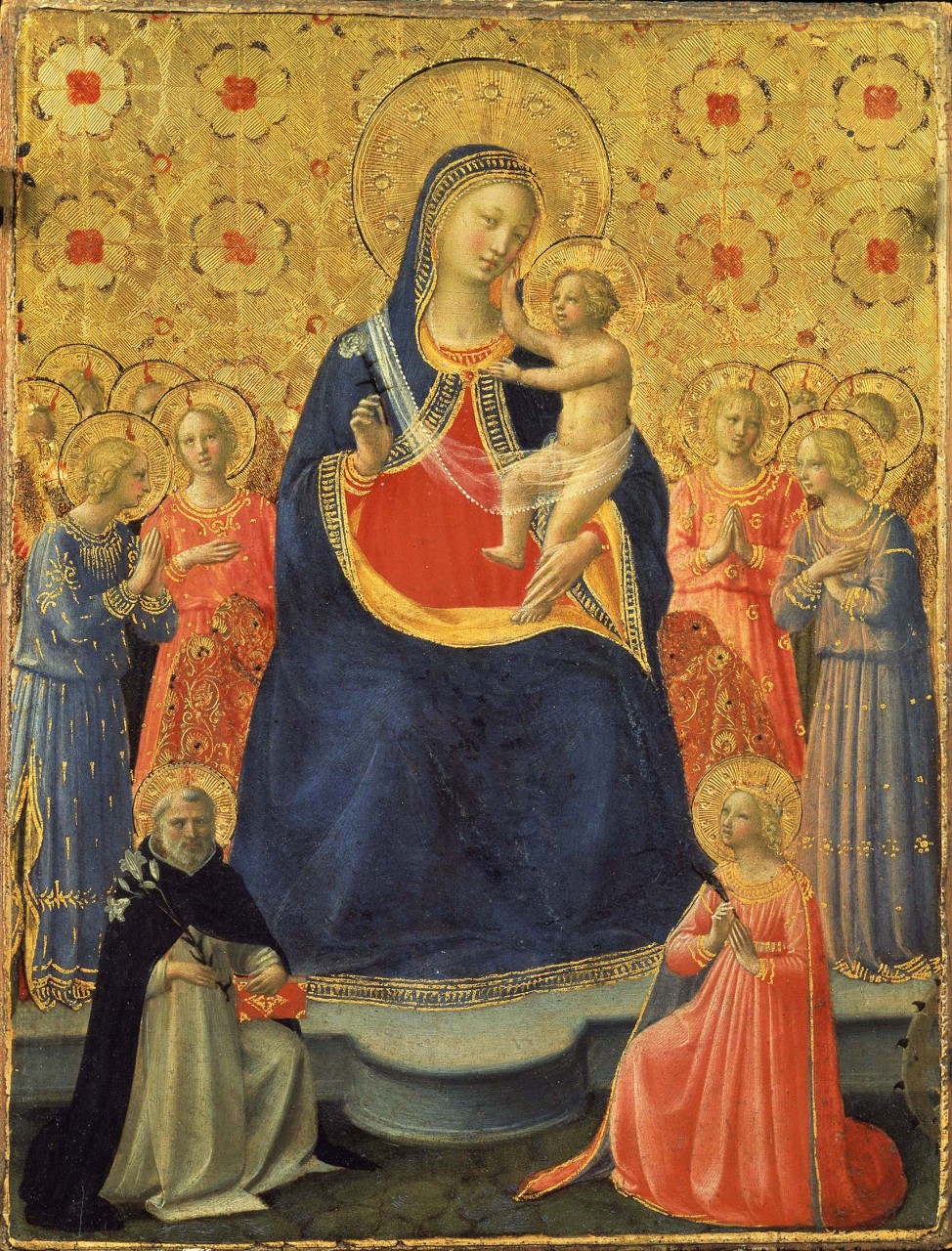
Today’s Bethlehem is conflicted, but this is nothing new. When Jesus was born, it lay in territory ruled over by Herod: not a safe place to grow up in, as Matthew’s story of the massacre of the innocents makes clear. But at its heart the nativity story is not a piece of gritty, social comment on homelessness or poverty. ‘No room at the inn’ is more likely to mean ‘there was no space in the lodging or guest-room’. The houses in the vicinity of Manger Square had caves behind where animals were stabled. We can imagine Joseph, a native of the town like Mary, taking her to his parents’ or friend’s home whose cave was a quieter, safer place in which to give birth. When the old masters painted the nativity, they cleaned the stable and beautified the messy realities of childbearing, but they understood the tender image of the holy family sharing in wonder and love and great joy at this mystery, this so much longed-for coming. In the church, I felt I was touching this ancient story. The Persians would have razed it to the ground in the 6th century had it not been for the Magi in Persian dress depicted on the west front: they spared it for the sake of that image. And because Muslims were allowed to use the south transept for prayer since the 7th century, they too spared the church in later times when so much else was lost. It is as if the memory of the Nativity has shed a redeeming light on Bethlehem across the centuries to keep it safe. In the Shepherds’ Fields they say: here it is always Christmas.

Bethlehem means ‘House of bread’. That may not have been its original meaning, but it’s how it is remembered. I have often meditated on that name.  It suggests a place of goodness and plenty, perhaps prompted by the Bible story of Ruth garnering in its golden fields at harvest time.  Her life was changed by her decision to linger at the House of Bread. Or great David, the beloved king whose city this was and whose memory in time became elevated into the hope of an Anointed One who would come. ‘You, Bethlehem Ephrathah…from you shall come forth for me one who is to be ruler in Israel’ says the prophet. This long-expected Messiah: he is Bethlehem’s gift, Bethlehem’s food, Bethlehem’s bread.  He is the one whom we have crossed this lowly threshold to see, this marvellous Child in whom a new dawn is breaking, Jesus the living Bread who feeds the hungry and fills them with good things.

The door of the House of Bread is always open.  We come as we are, lost, lonely, hopeless, hungry and poor: nothing in our hands we bring. We push tentatively, even a trifle foolishly, at that open door that the Key of David has opened and no-one can shut. Perhaps it always is when we go there, and are willing and humble enough to step down into the cave of nativity and take the gift held out to us. And we find as we find nowhere else that this little tiny Child bids us welcome, invites us in, sits us down and asks us taste his meat. Love’s work: that is what we understand when we feast in the House of Bread, and our eyes are opened, and we recognise him. Young children often have the power to invite us to rediscover kindness and pity, gentleness and hope.  This makes the awfulness of the slaughtered children of Newtown and the child-refugees of Syria all the more cruel. But this child does more. He draws our wonder and our love because of all that he has to give.  In the House of Bread our lives are given back to us once more, their broken fragments gathered up like grain scattered on the hillsides so that in him we begin to live again.

Like all the best gifts, Bethlehem is not just for Christmas. The House of Bread is open all the year round for us to find a welcome and share a feast. For here is promised everything that belongs to our redemption brought us by this holy child. The bread with which he will feed a hungry crowd as a sign of his generosity; the bread he will break at the last supper and give to his disciples; the command he will give that we go on sharing bread in his memory, broken bread for his body given for us all and for the life of the world; living bread for Easter when with burning heart we know him as the one who is risen from the dead. Bethlehem gives its name to all that belongs to Jesus and all that belongs to us.  He says to us and to all humanity, in our living and our loving, our suffering and our dying that in him all our hungers are satisfied.

So we go with the shepherds to Bethlehem on this Christmas Day. And as we enter the House of Bread we allow our hungers and longings to find a voice, knowing that the Holy Child welcomes us and hears us. What shall we ask of him? Perhaps on Christmas morning we echo the cries that come from the depths of every human heart. Give us happiness. Give us healing.  Give us purpose. Give us hope. Give us your kingdom. Give us love. And give us, we pray, our daily bread: today at Christmas and throughout this coming year. Amen Lord, give us this bread always!

Durham Cathedral, Christmas Day 2012 (Luke 2.8-20)